

What is the durability of a disposable wood knife?
Nov 28, 2025
Leave a message
Disposable wood knives have become a popular choice in various settings, from outdoor picnics to large - scale food service events. As a supplier of disposable wood knives, I often get asked about the durability of these seemingly delicate items. In this blog, I'll delve into the factors that affect the durability of disposable wood knives, how they compare to other types of disposable cutlery, and why they might still be a great option despite their perceived fragility.
Understanding the Material: Wood
Before we discuss durability, it's important to understand the nature of the material. Wood is a natural and renewable resource. It has been used for centuries in the creation of tools and utensils. When it comes to disposable wood knives, the type of wood used plays a crucial role in determining its durability.
Common woods used for disposable wood knives include birch, beech, and poplar. These woods are chosen for their availability, workability, and relative strength. Birch, for example, is known for its fine grain and good strength - to - weight ratio. Beech is also strong and has a smooth finish, which makes it suitable for knife production. Poplar, on the other hand, is a softer wood but is still durable enough for many light - duty applications.
Factors Affecting Durability
1. Thickness and Design
The thickness of the disposable wood knife is a significant factor in its durability. A thicker blade is generally more robust and less likely to break or snap during use. Knives with a well - designed shape, such as a reinforced tip or a thicker handle, can also withstand more pressure. For instance, a knife with a wider handle provides better grip and distributes the force more evenly, reducing the risk of the blade breaking due to uneven pressure.
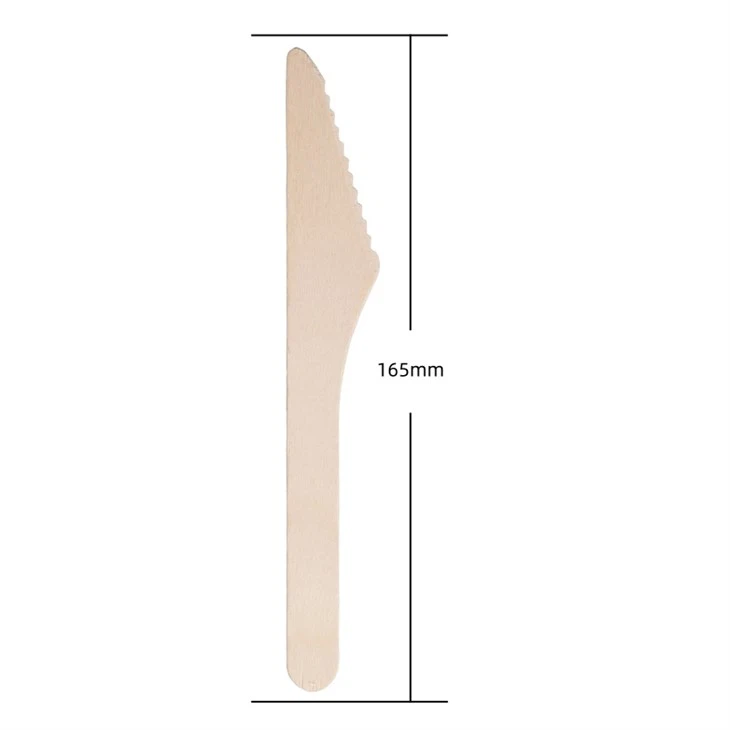
Our 165 mm Disposable Wood Knife is designed with a balanced thickness and shape to ensure optimal durability. The 165 - mm length provides a good reach for various tasks, while the carefully crafted blade and handle design make it suitable for cutting through a range of foods.
2. Type of Food Being Cut
The durability of a disposable wood knife is also affected by the type of food it is used to cut. Soft foods like fruits, cakes, and sandwiches pose little challenge to the knife. The blade can easily slice through these items without significant wear or damage. However, when it comes to harder foods such as crusty bread, raw vegetables, or meats, the knife may face more stress.
Cutting through crusty bread, for example, requires more force, and the hard crust can put pressure on the blade, potentially causing it to chip or break. Similarly, raw vegetables with tough skins, like carrots or cucumbers, can also test the limits of the knife's durability. Despite this, our disposable wood knives are designed to handle a variety of food types. They are sharp enough to cut through softer foods with ease and can withstand a reasonable amount of pressure when dealing with harder items.
3. Handling and Usage
How the knife is handled by the user also impacts its durability. Rough handling, such as applying excessive force or using the knife in an improper way, can quickly damage the blade. For example, using the knife to pry open a container or to cut through non - food items is likely to cause the blade to break.
Proper usage involves holding the knife correctly and applying just enough force to cut through the food. Our packaging includes some basic usage instructions to help users get the most out of our disposable wood knives and ensure their durability.
Comparing with Other Disposable Cutlery
1. Plastic Cutlery
Plastic cutlery is another popular choice for disposable use. In terms of durability, plastic cutlery can be more flexible and less likely to break under normal use. However, it has its own drawbacks. Plastic is not biodegradable, which means it contributes to environmental pollution.
Disposable wood knives, on the other hand, are biodegradable. They break down naturally over time, making them a more eco - friendly option. While they may not be as flexible as plastic cutlery, they are often sharp enough to provide a better cutting experience, especially for food items that require a more precise cut.
2. Paper Cutlery
Paper cutlery is the most lightweight and least durable option among disposable cutlery. It is mainly suitable for very light - duty tasks, such as spreading soft spreads or cutting through extremely soft foods. Disposable wood knives offer much more durability than paper cutlery. They can handle a wider range of food types and are more likely to remain intact during use.
Benefits of Disposable Wood Knives Despite Durability Concerns
1. Environmental Friendliness
As mentioned earlier, disposable wood knives are biodegradable. This is a significant advantage in today's environmentally conscious world. When disposed of properly, they will break down in the soil, leaving behind no harmful residues. This makes them a great choice for events and businesses that want to reduce their environmental impact.
2. Aesthetic Appeal
Wood has a natural and warm look that adds a touch of elegance to any dining setting. Whether it's a picnic in the park or a high - end catering event, disposable wood knives can enhance the overall aesthetic. They give a more rustic and natural feel compared to plastic or paper cutlery.
3. Customizability
Our Disposable Wooden Knife | Biodegradable & Customizable Cutlery for Food Service can be customized to meet the specific needs of our customers. We can print logos, designs, or messages on the knives, which is a great way for businesses to promote their brand. This customizability is not always available with other types of disposable cutlery.
Ensuring Optimal Durability
1. Quality Control
At our company, we have strict quality control measures in place to ensure that each disposable wood knife meets our high standards. We source our wood from sustainable forests and use advanced manufacturing techniques to produce knives that are both sharp and durable.
2. Proper Storage
Proper storage of the disposable wood knives is also important for maintaining their durability. They should be stored in a dry place to prevent the wood from absorbing moisture, which can weaken the blade. Our Disposable Wood Knife in Bag comes in a sealed bag, which helps to protect the knives from moisture and dust during storage and transportation.
Conclusion
In conclusion, while disposable wood knives may not be as durable as some other types of cutlery in all situations, they offer a unique combination of environmental friendliness, aesthetic appeal, and customizability. By understanding the factors that affect their durability and taking proper care of them, users can get the most out of these knives.
If you're interested in purchasing our high - quality disposable wood knives, we invite you to contact us for a purchase negotiation. We can provide you with more information about our products, pricing, and customization options. Let's work together to find the best disposable cutlery solution for your needs.

References
- "Wood Handbook: Wood as an Engineering Material." Forest Products Laboratory, U.S. Department of Agriculture.
- "Environmental Impact of Disposable Cutlery." Journal of Sustainable Consumption, Vol. 12, Issue 3.
Send Inquiry